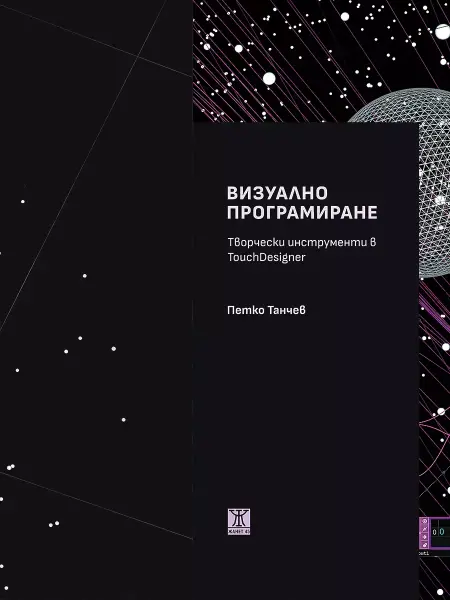
The Art of Visual Programming
Between Material and Code
Petko Tanchev’s interest in visual programming stems from a desire to understand the inner workings and properties of the tools he uses. During his studies in scenography, he discovered that the process of creating an artwork, experimenting with materials, and exploring various technical solutions could be just as significant as the final result. This perspective gradually extended into digital art, where traditional forms of artistic expression converge with the possibilities of software programming.
After his experiments with Pure Data, Max/MSP, and Processing, TouchDesigner gradually became a central tool in Tanchev’s professional practice. The platform enabled him to think visually, build his own systems, and experiment with forms, images, movement, and interaction in real time.
Within this environment, creating an artwork goes beyond using ready-made effects or following a sequence of predefined operations. Each project calls for an individual approach in which the artistic concept shapes the organization of software components, while technical capabilities may reveal unexpected creative solutions. A deep understanding of the tools becomes a prerequisite for developing new methods, interactive systems, and artistic concepts.
From History to Application
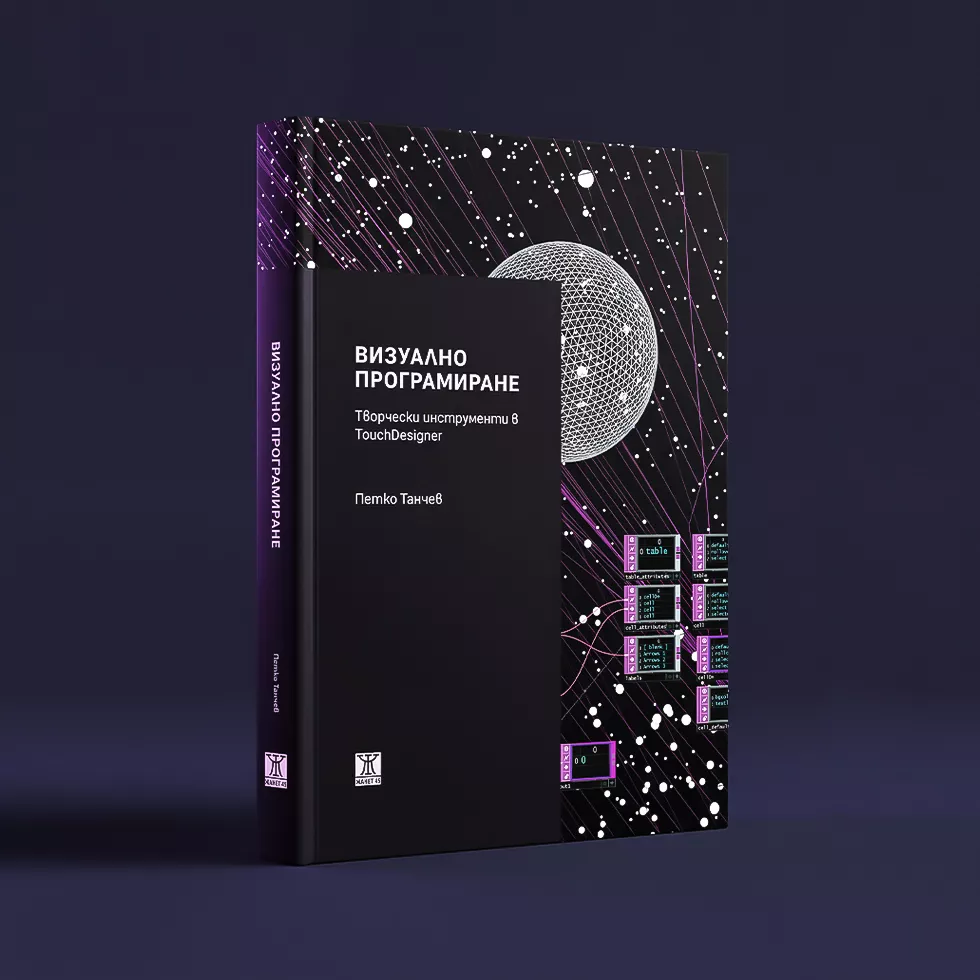
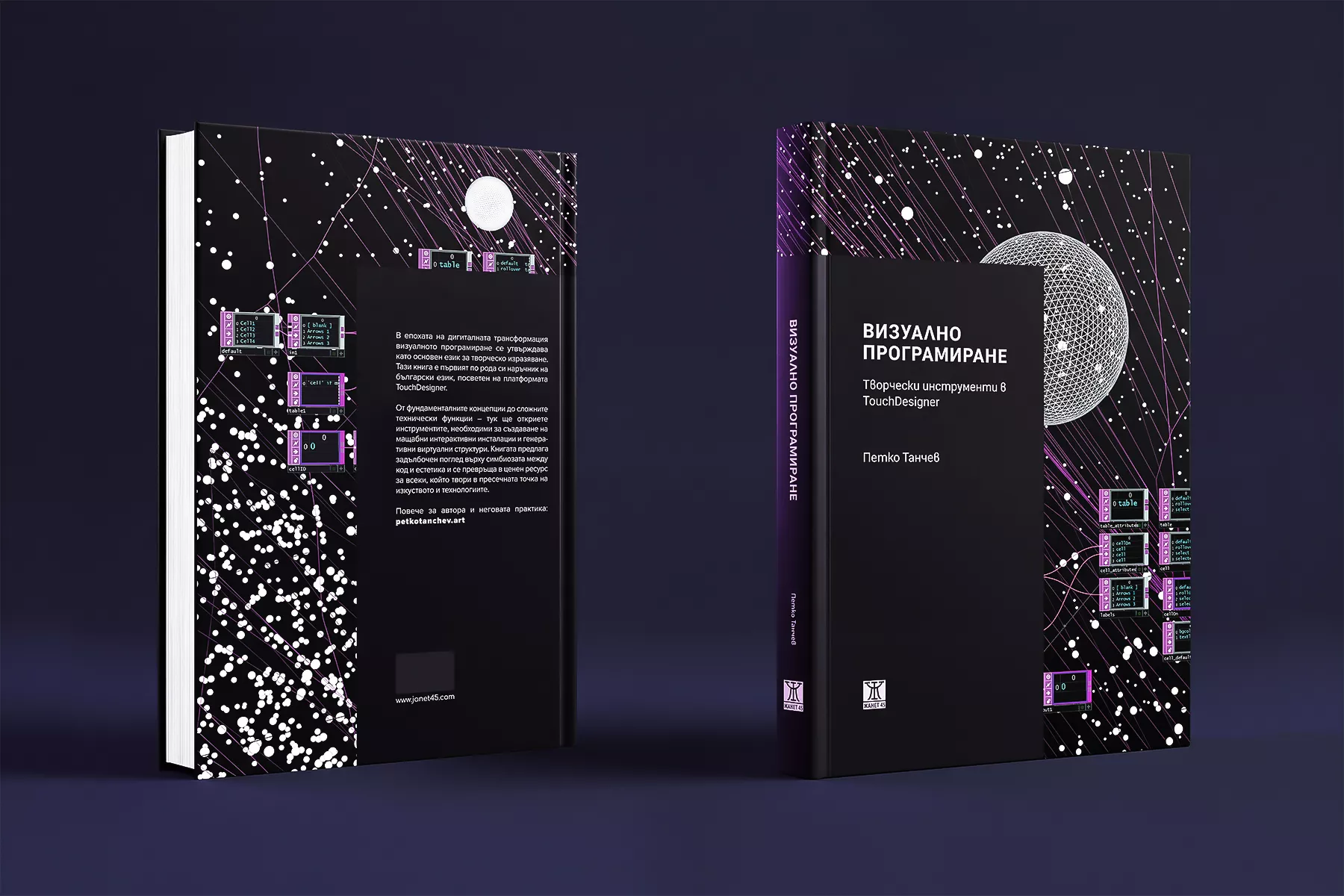
“VISUAL PROGRAMMING. Creative Tools in TouchDesigner” systematized this knowledge into four chapters, connecting the history of computer art with the principles of contemporary programming environments and their practical applications.
The first chapter, “Visual Programming for Artists,” traces the technological and artistic developments that led to the emergence of this distinct approach to programming. It explores early experiments in computer graphics, digital animation, and generative art, the evolution of the graphical user interface, and the gradual establishment of the computer as a medium for artistic expression. Within this historical context, the chapter also introduces the fundamental ideas behind the creation of TouchDesigner.
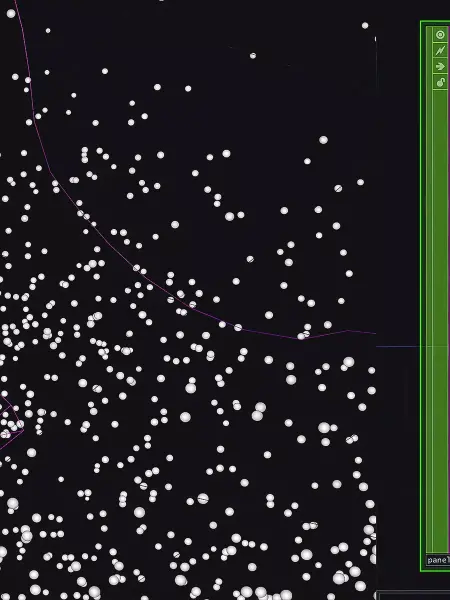
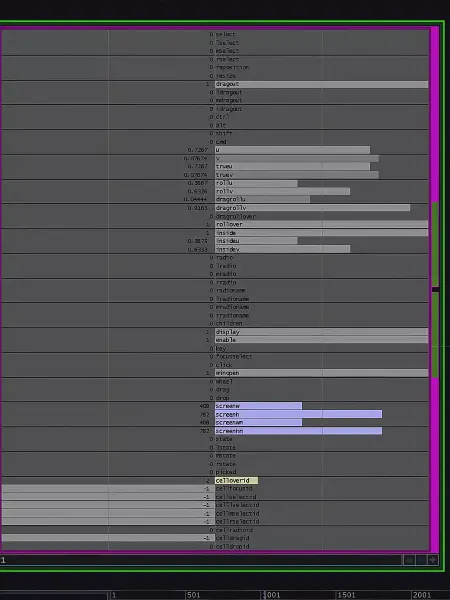
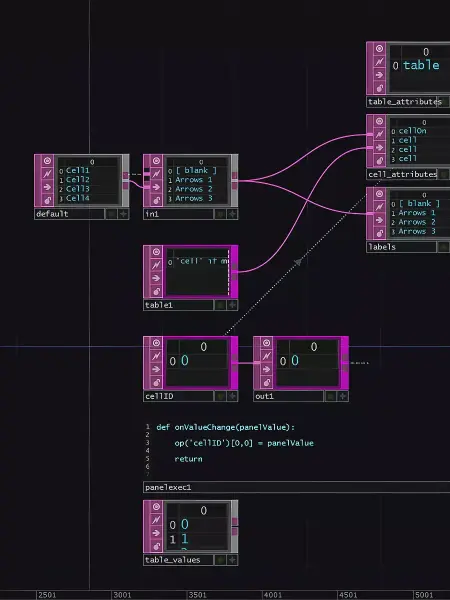
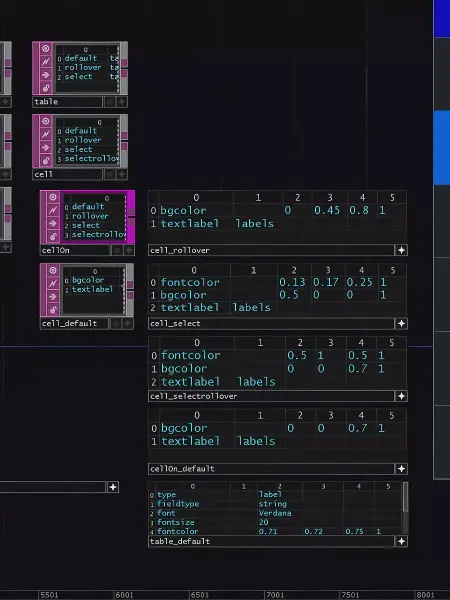
The next two chapters turn to the structure and functional capabilities of the platform. “Core Principles in TouchDesigner” introduces readers to the organization of the interface, the use of operators, and the construction of node-based networks. “Functions and Applications” expands upon this foundation, covering software prototyping, integration with other programming environments and hardware devices, 2D and 3D graphics, generative content, and media system control.
The fourth chapter, “Practice and Creative Experience,” explores how these principles are applied in artistic practice. Drawing on examples from the author’s own projects, it presents concepts, creative methods, and specific technical solutions developed for interactive installations, projection mapping, and visual environments for theatre and opera productions. It also includes curatorial and educational initiatives, artist residencies, and collaborative research laboratories.
These examples reveal not only the potential applications of TouchDesigner but also the processes through which software tools are adapted to the specific requirements of individual artworks.
Knowledge Beyond Individual Experience
Working with visual programming also means being part of an international community of artists, programmers, and researchers who exchange knowledge, develop their own components, and share their methods through forums, publications, workshops, and collaborative projects.
This exchange has played a significant role in Tanchev’s development as an artist and educator. His participation in creative laboratories, residencies, and collaborative productions has provided opportunities to encounter diverse approaches to technology and artistic design. The experience gained through these encounters informs his artistic work, educational initiatives, and teaching practice. Some of these activities are also explored in the book.
This culture of sharing was one of the key motivations behind the publication. Specialized literature, online documentation, and discussions within professional communities serve not only as sources of knowledge but also as starting points for independent research. In this environment, the exchange of ideas and working methods fosters experimentation, while individual artistic experience contributes to an evolving body of collective knowledge.
The Path to Publication
The book originated in Petko Tanchev’s doctoral dissertation, developed between 2020 and 2023. The research brought together methods and technologies used over many years in his artistic practice, with the aim of presenting them in an accessible yet comprehensive form. Another important motivation was the lack of comparable specialized literature in Bulgarian.
Following the dissertation defense, an opportunity arose to bring the research to a wider readership. Thanks to the interest of the Janet 45 publishing house, the text underwent editing and adaptation into book form, resulting in its publication in 2026. That same year, it also served as the principal habilitation work in the academic competition through which Tanchev was appointed Associate Professor.
In its final form, “Visual Programming” combines the qualities of academic research, an educational guide, and a practical reference. Beyond the systematic presentation of technical knowledge, the book raises a broader question: how can a deeper understanding of technology expand artistic thinking and open the way to new creative discoveries? This idea connects the research to the artistic practice from which it emerged.
An excerpt from
the book is available for free viewing and download in PDF format.
The publication
is available in bookstores and can also be ordered online through the Janet 45 Publishing
website.